Green Spaces: Process and Outcomes
Design Process
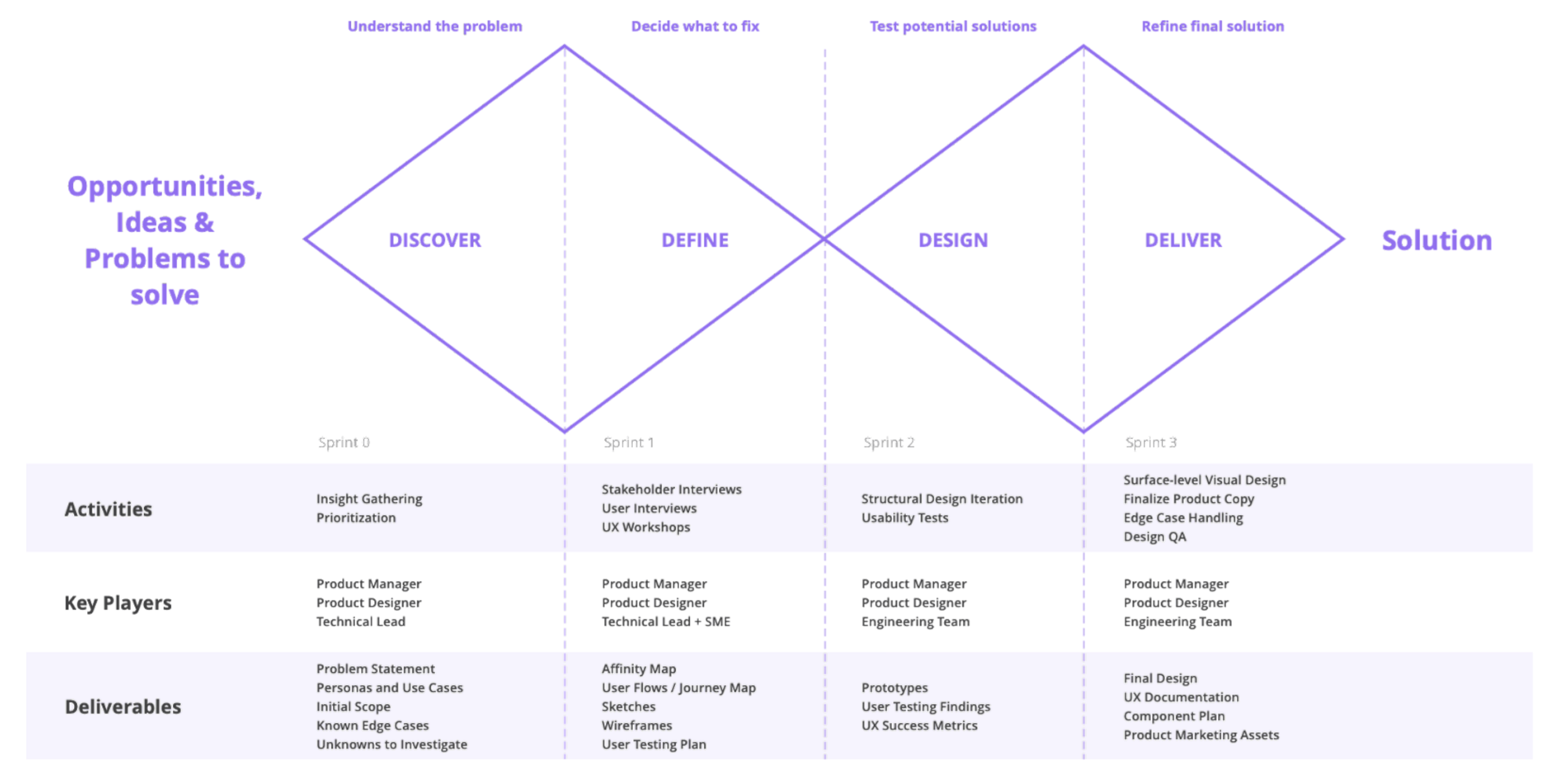
The double diamond methodology serves as a flexible framework for systematically addressing complex problems within the realm of design. This approach is versatile, catering to design sprints of varying durations, ranging from two days to two months, depending on the complexity of the problem at hand. It offers a structured means of organizing work stages, communicating progress to key stakeholders, and ensuring that thoughtful consideration is given to each problem-solving endeavor.
In this case study, we will delve into the practical application of this methodology within the context of large-scale projects.
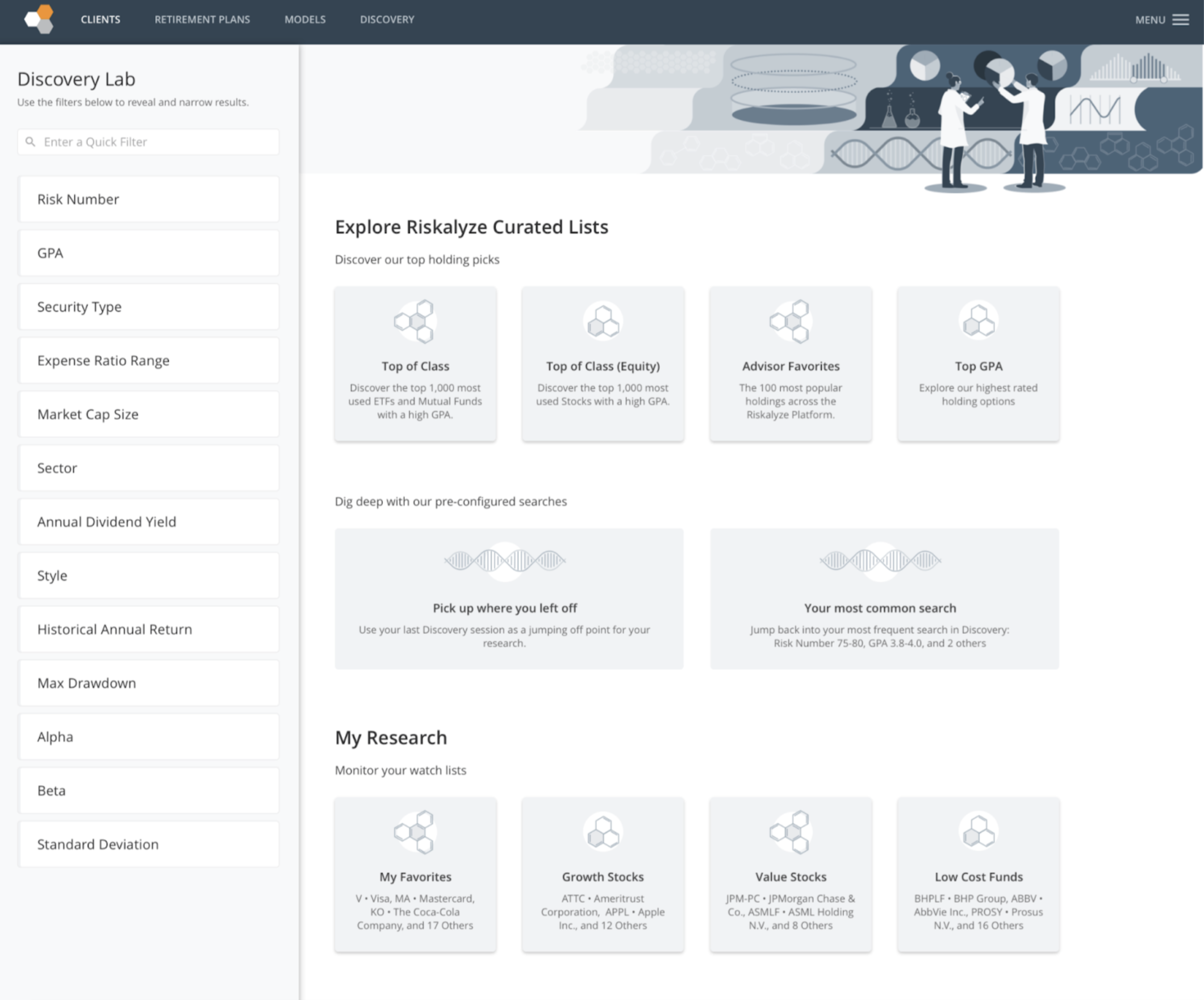
The "Discovery" project presented a unique challenge as it marked the inception of an entirely new facet of our platform. With a six-month timeframe for engineering completion, we aimed to debut this new platform segment at Summit, the Riskalyze Fintech conference.
Note: In this project, we will refer to this project as "Discovery" for clarity, given the overlap between the Discovery Initiative and the Discovery Phase of Design.
Discovery Phase
Project Description: The Intelligent Investment Research Project ("Discovery") empowers Riskalyze to become a premier player in aiding advisors in making informed investment decisions. This user-friendly tool serves as a central hub for exploring various investment options and reviewing widgets, including watchlists, news snippets, and trending securities.
Business Objective: The primary aim of this project is to provide advisors with an all-encompassing solution, rendering the need for Morningstar Advisor Workstation obsolete.
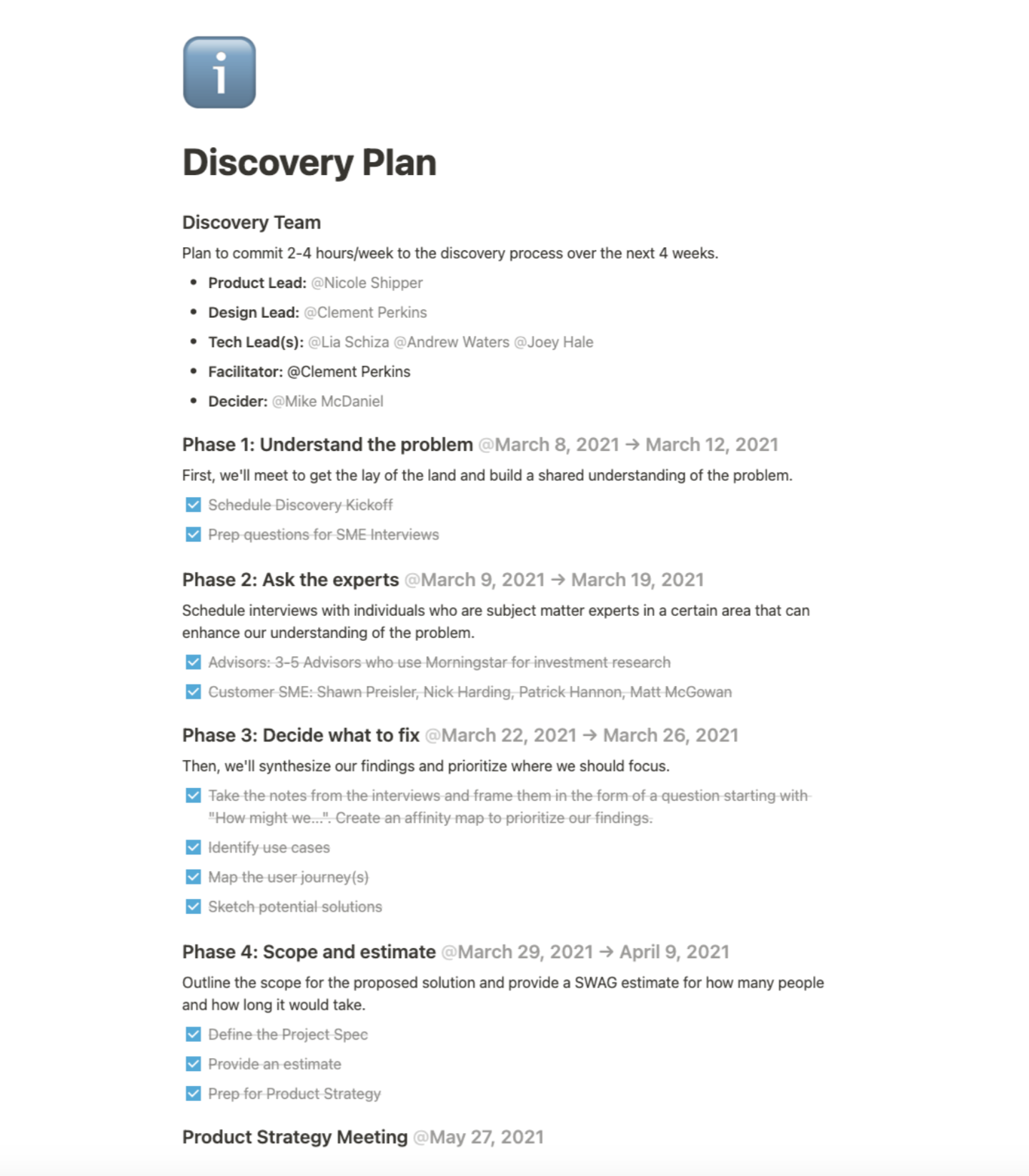
Our journey begins with the development of a Discovery Plan in collaboration with the Product Manager, Engineering Lead, and other key stakeholders. In this instance, our Chief Investment Officer, Mike McDaniel, played a pivotal role in the early-stage design process. During this initial phase, we meticulously outline the UX exercises required and establish a project timeline, typically spanning 15 to 30 minutes. At Riskalyze, I collaborate closely with the Product Manager to schedule interviews, facilitating efficient scheduling for both internal and external sessions while ensuring the early involvement of key stakeholders in the scheduling process.
Subsequently, we convene a Discovery Kickoff call when we are ready to embark on the design phase. In this meeting, the Product Manager, Engineering Lead, and I comprehensively review the current state of affairs, articulate our desired outcomes with measurable goals, identify any initial assumptions, and raise pertinent questions requiring validation.
Definition Phase
This stage involves conducting a series of Subject Matter Expert (SME) interviews with both internal teams (Support, Sales, Risk, and Methodology) and Financial Advisors who utilize the Riskalyze platform. Each interview is meticulously recorded, and notes are transcribed into actionable insights.
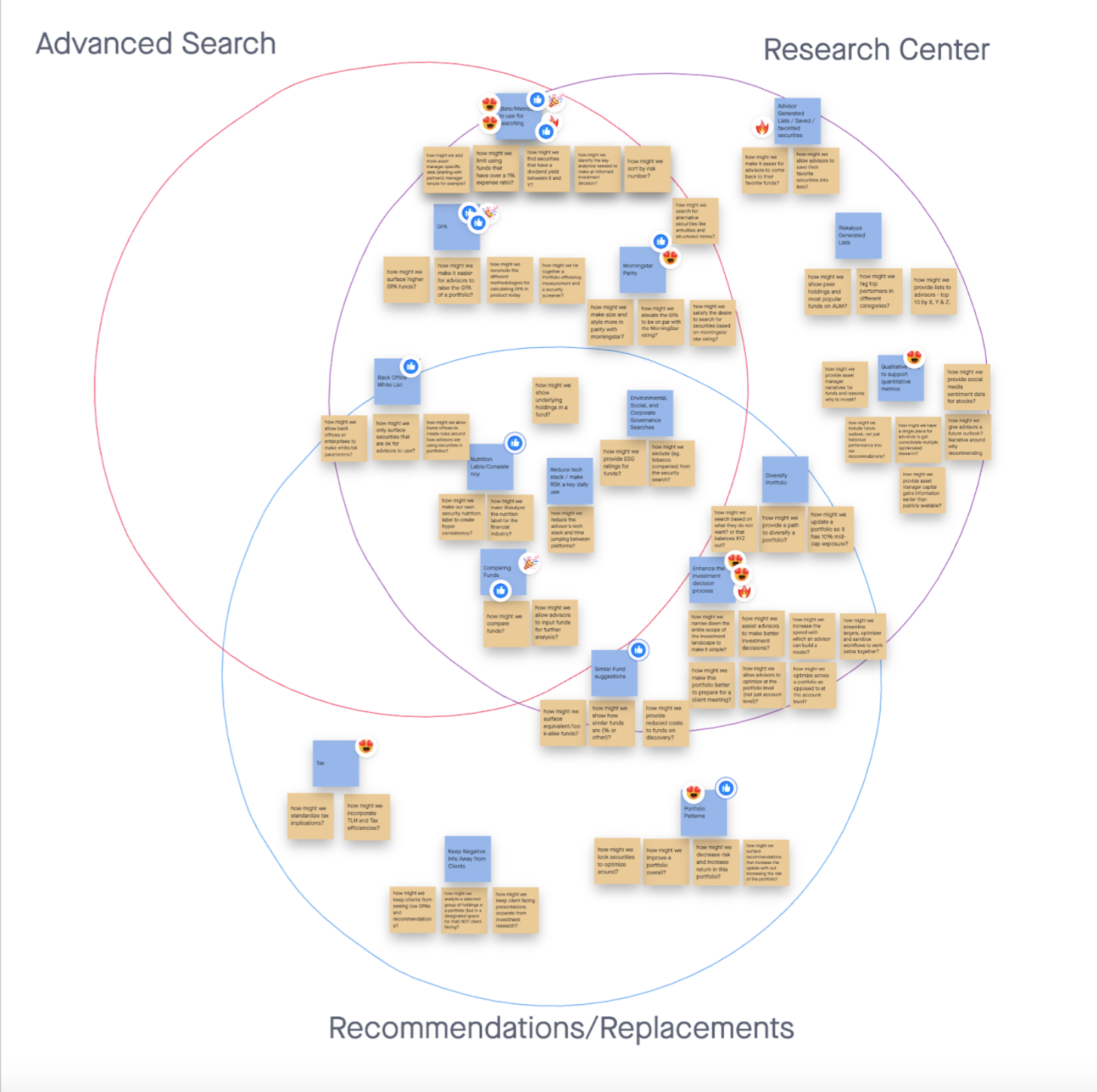
Following the collection of insights from internal and external stakeholders, we encapsulate these findings into succinct statements on sticky notes. These notes are then categorized through affinity mapping to derive high-level priorities. Subsequently, we create a three-way Venn diagram around identified opportunities—a process commonly referred to as "How Might We."
Throughout the project's inception, our focus remained steadfast on addressing the core problem of "How might we make it easier for advisors to find ideal investments without leaving Riskalyze" by implementing a security screener. While this solution addressed the majority of insights gathered during our interview process, it also sparked discussions around Recommendations and Replacements, ultimately leading to a broader conversation on Machine Learning.
At the conclusion of the "How Might We" exercise, we delve into the customer journey and Minimum Viable Product (MVP) workflows to gain a deeper understanding of each user action. This exercise aids in identifying pain points, opportunities for enhancement, moments of user delight, and underlying assumptions, thereby laying the groundwork for early wireframes.
Metadata Forced Prioritization
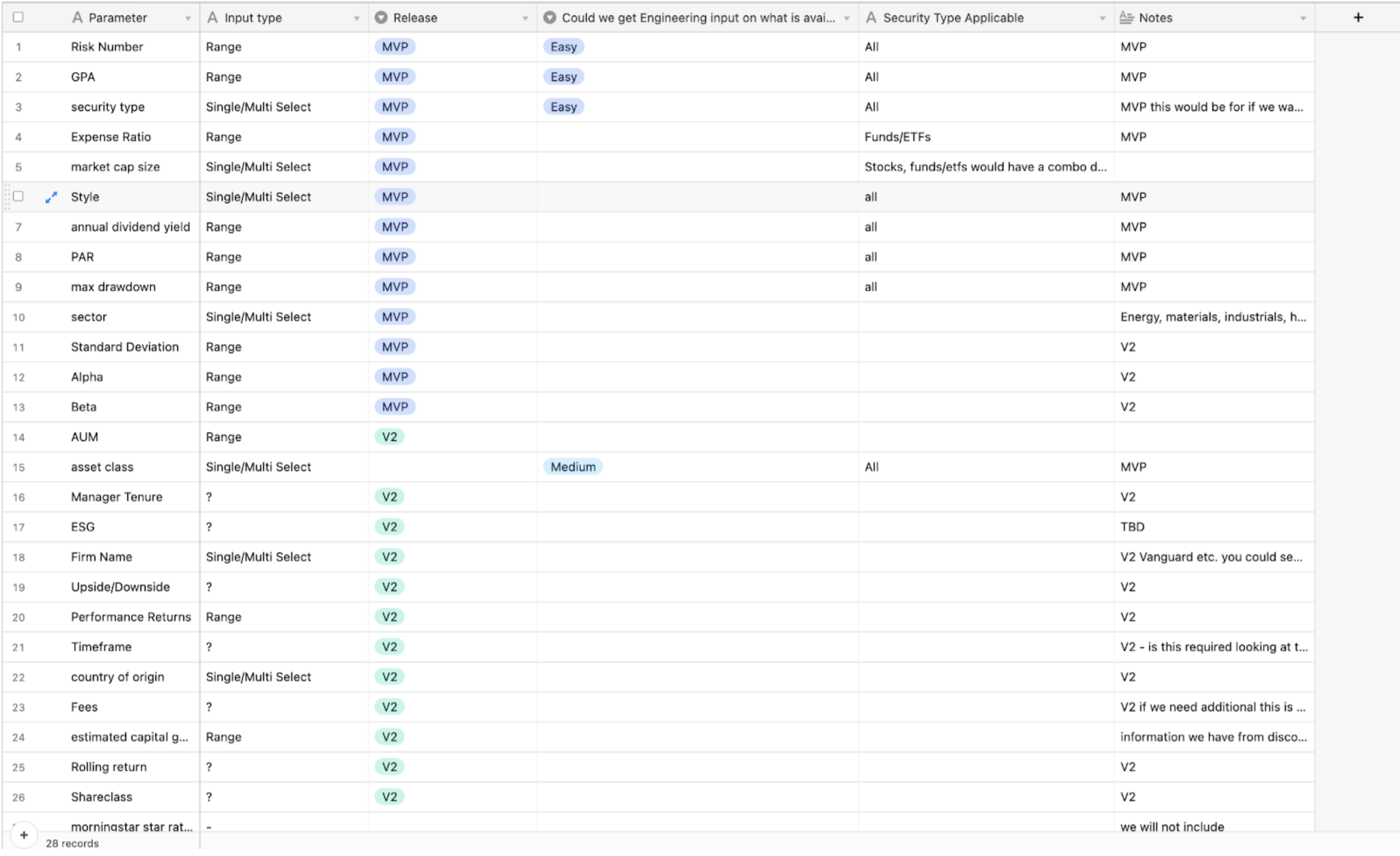
This stage entails a comprehensive audit of available metadata, followed by the prioritization of information based on its importance to the user. This exercise informs feature prioritization and the information's placement within the page architecture. For instance, the Risk Number for a security emerges as a critical piece of information, justifying its prominent size and location on the page. Additionally, context is considered, determining which pieces of information are best grouped together and whether any data points provide context for others. This process facilitates the creation of natural information groupings, contributing to the overall information architecture of the page.
During this phase, the Product Manager and I collaborate to identify any potential overlap or conflicting data that necessitates consideration in our filtering panel.
Design Phase
Wireframing and Early Sketches:
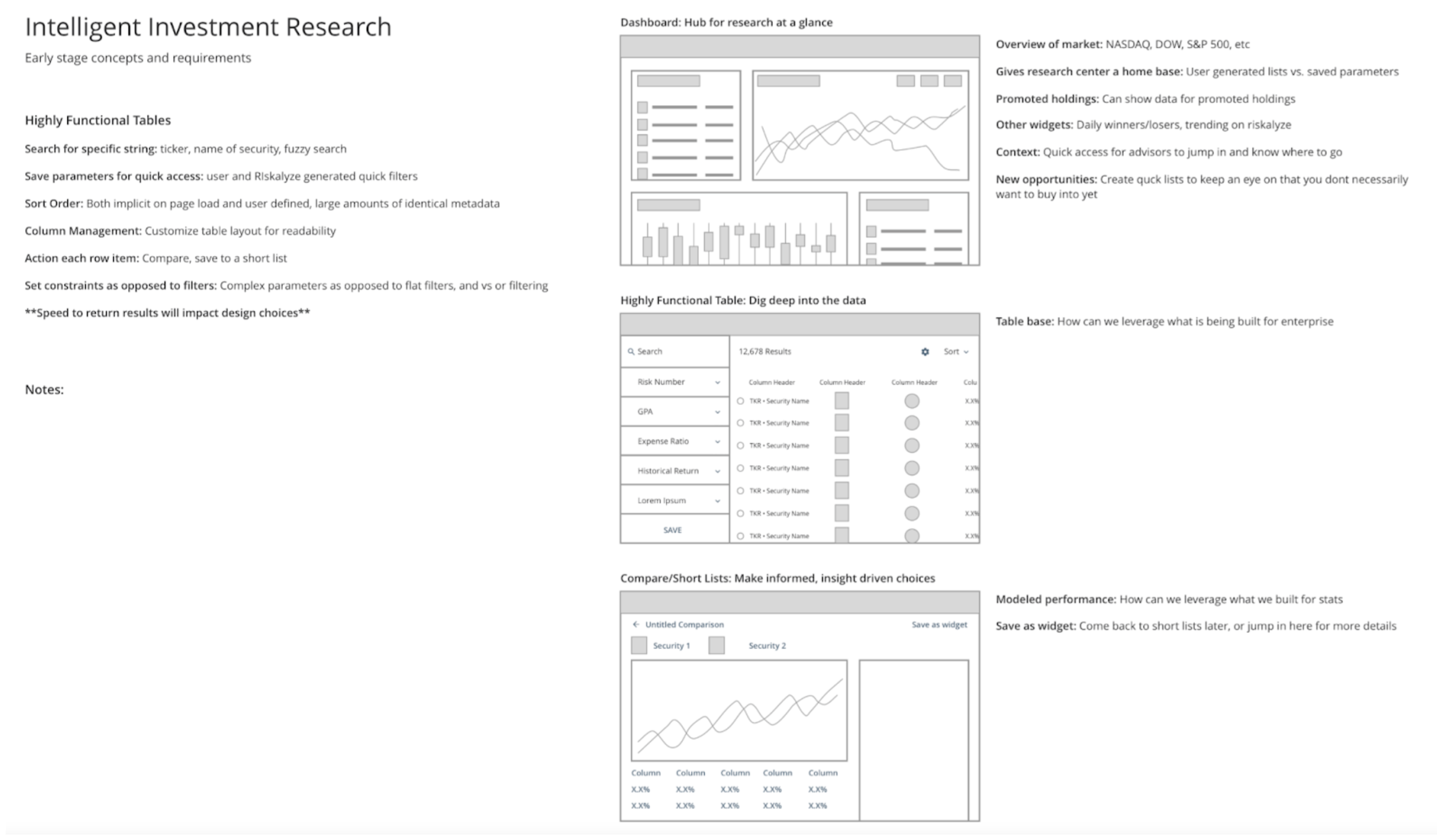
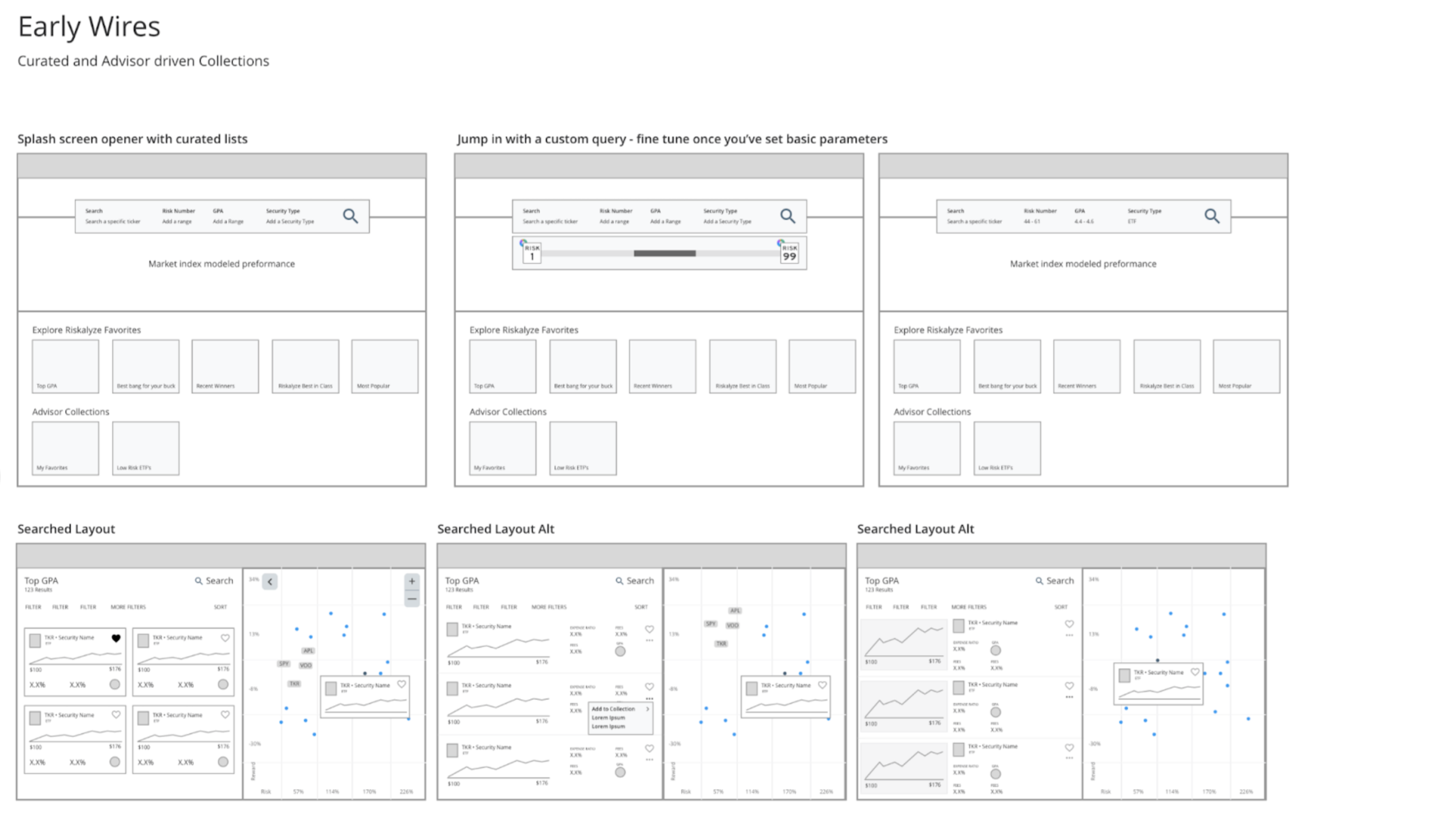
Within a week's timeframe, I initiated rapid wireframing efforts. Once we arrived at a promising direction, we commenced low-fidelity testing. I developed clickable prototypes in InVision, which underwent testing by a group of ten users familiar with both Riskalyze and Morningstar.
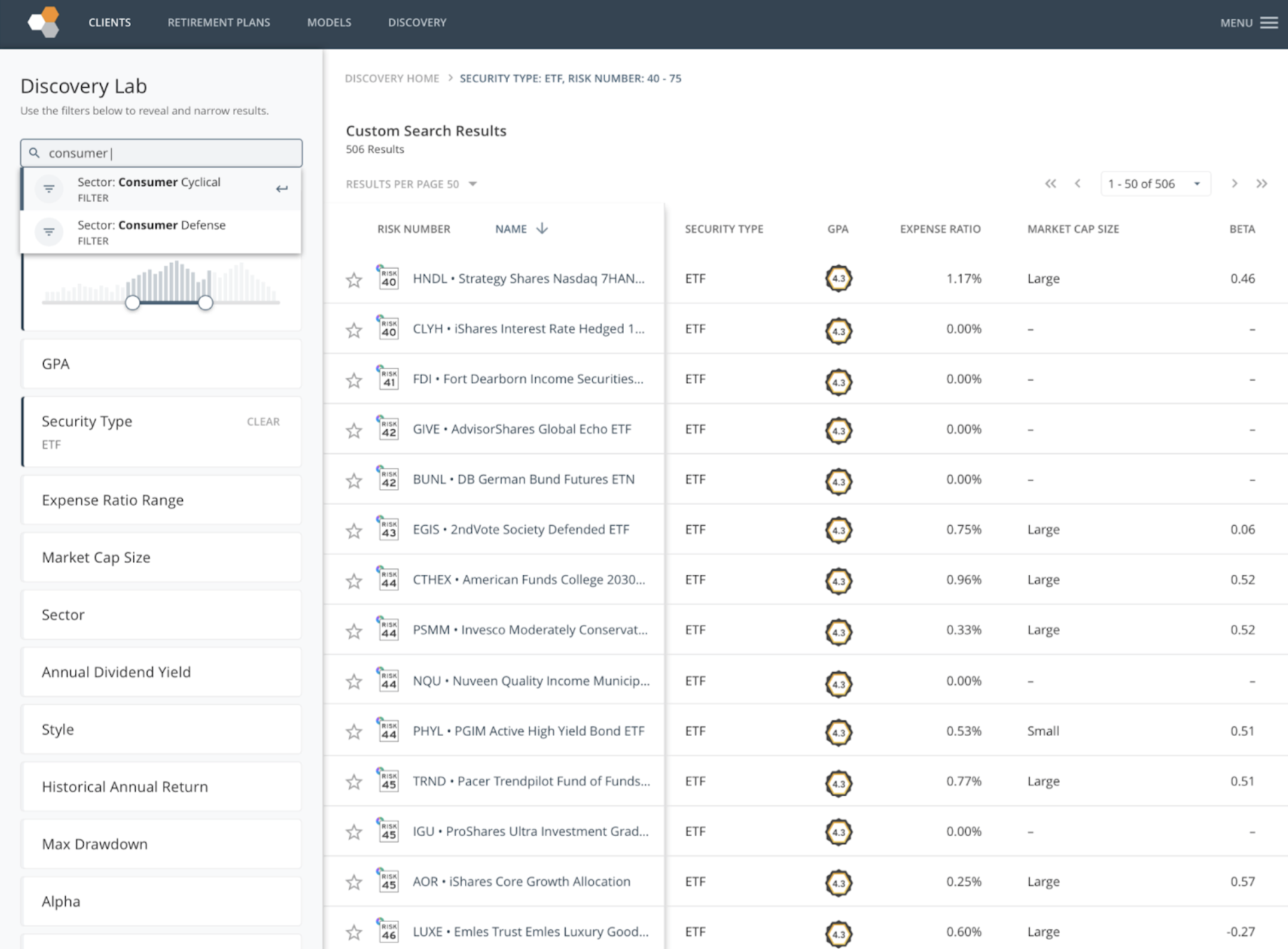
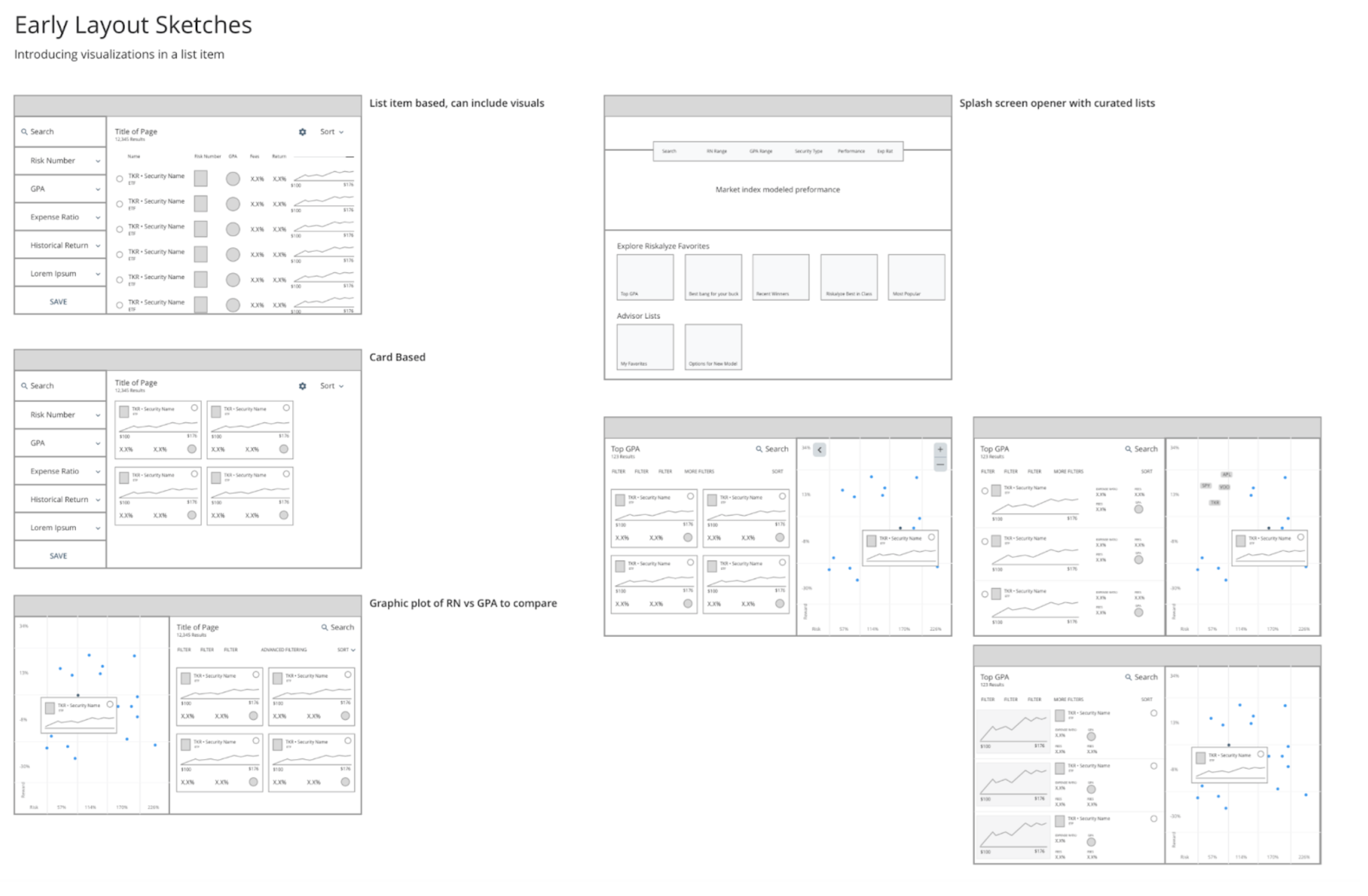
I initially sketched ideas on my whiteboard and subsequently translated these sketches into rough wireframes. Over the course of two rounds of refinement, we settled on utilizing a splash page to house favorites, watchlists, and Riskalyze curated lists, effectively streamlining our design process by capitalizing on existing Design System components from our React library. This approach substantially reduced development time as we worked toward our Design deadline. We also explored the concept of graphically mapping data for user exploration, akin to platforms like Zillow or Airbnb. Although the interactive map did not make it into the Minimum Viable Product (MVP), it remains on our roadmap for implementation in Q2 of this year.
Given our comprehensive Design System, I swiftly transitioned into a phase of "Medium Fidelity," facilitating rapid iterations to test visual elements that align with the baseline patterns established in our wireframes. This phase ran concurrently with user testing of the foundational wireframes, optimizing our output and enabling ongoing iteration between calls. This approach rapidly highlighted constraints, such as the inability to incorporate sparklines into individual list items due to data limitations and time constraints. The medium fidelity phase proved invaluable during our weekly check-ins with the engineering team, allowing for alignment on project plans within tight timeframes.
Deliver Phase
I transitioned into the high-fidelity phase, refining the work to date. This phase included contributing to header illustrations, creating an icon pack utilized by our marketing team for individual cards, and preparing a full, clickable, high-fidelity prototype. This prototype was showcased during our CEO's keynote address at Summit. In the final two weeks leading up to Summit, I prototyped and presented a filtering system aimed at reducing the time spent navigating filters by enabling users to swiftly apply filters without leaving the keyboard. While we lacked the time for comprehensive testing, this feature received enthusiastic endorsement from our CEO and performed exceptionally well upon its initial release. I continue to monitor user interactions to inform the introduction of future filters.